Filipino Pinakbet - Squash and Vegetable Stew
A glossy, savoury Filipino vegetable stew of squash, aubergine, okra, long beans and bitter melon simmered with tomato, ginger and shrimp paste.
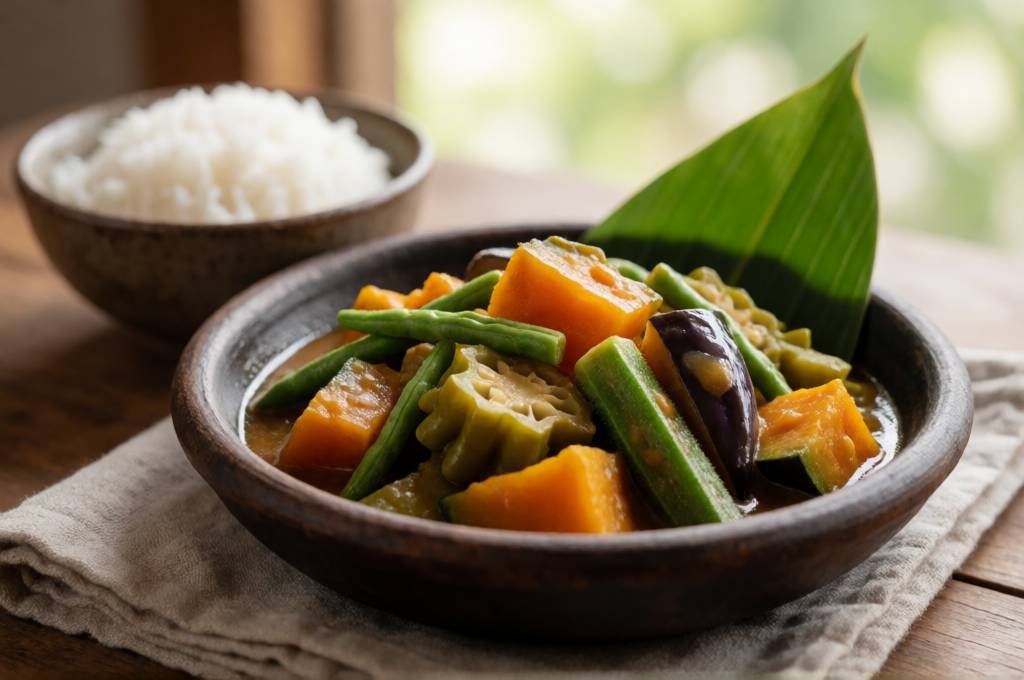
The backbone of the flavour is bagoong, the fermented shrimp paste used across the Philippines. A spoonful stirred into the tomatoes turns a plain vegetable stew into something rich and rounded. If you keep a vegetarian kitchen, a mix of white miso and soy sauce with a pinch of crumbled nori approximates that savoury, sea-tinged depth surprisingly well.
Filipino cooking builds the vegetables in order of how long they take, and the stew is finished with a brief uncovered simmer so the sauce clings rather than pools. Serve it over steamed rice - the sauce is made for it.
Ingredients
- 2 tbsp neutral oil
- 1 onion, sliced
- 4 garlic cloves, crushed
- 1 thumb-sized piece ginger (20 g), cut into thin matchsticks
- 3 ripe tomatoes, chopped
- 1 tbsp bagoong (Filipino shrimp paste), or 1 tbsp white miso plus 1 tsp soy sauce for a vegetarian version
- 350 g kabocha or butternut squash, peeled and cut into 3 cm chunks
- 1 aubergine, cut into 3 cm chunks
- 150 g long beans or green beans, cut into 5 cm lengths
- 8 okra pods, tops trimmed
- 1 small bitter melon, halved, seeded and sliced 1 cm thick
- 150 ml water or light vegetable stock
- 1 tsp fish sauce or soy sauce, to taste
- Steamed jasmine rice, to serve
Instructions
- Heat the oil in a wide pot or deep pan over medium heat. Cook the onion for 4 minutes until soft, then add the garlic and ginger and cook for 1 minute more.
- Add the chopped tomatoes and the bagoong (or miso and soy). Cook for 5-6 minutes, pressing the tomatoes with the back of a spoon, until they collapse into a thick, glossy sauce.
- Add the squash with the water or stock. Cover and simmer for 6-8 minutes, until the squash is just starting to soften at the edges but still holds its shape.
- Stir in the aubergine and long beans. Cook uncovered for 5 minutes, turning the vegetables gently so they all meet the sauce.
- Add the okra and bitter melon and cook for a final 4-5 minutes. Keep the pan uncovered so the sauce reduces and coats the vegetables instead of drowning them.
- Season with fish sauce or soy sauce, taste, and adjust. The bagoong and miso are both salty, so season at the end rather than the start.
- Serve hot over steamed jasmine rice, spooning plenty of the tomato sauce over the top.
Cook’s tips
- Do not stir pinakbet too much. Filipino cooks turn the vegetables rather than stir them so the pieces stay whole and the okra does not go slimy.
- The squash should be soft enough to crush against the side of the pot but not dissolved - check it before adding the quicker-cooking vegetables.
- Bitter melon is meant to be bitter. If you want it milder, salt the slices for 10 minutes, rinse and squeeze before adding.
- Salting the aubergine for 15 minutes and patting it dry keeps it from soaking up all the oil.
Substitutions
- Butternut, delicata or even sweet potato can replace kabocha squash.
- No bitter melon? The stew still works, but add a little extra okra or a handful of spinach for body. Bitter melon is available frozen in many Asian grocers.
- For a fully vegetarian and vegan pinakbet, use white miso with soy sauce and skip the fish sauce at the end, seasoning with salt instead.
- Chayote or snake gourd can be added with the aubergine if you have them.
Storage & reheating
Pinakbet is best the day it is made, while the vegetables still hold their shape. Leftovers keep for 3 days in the fridge and reheat gently in a covered pan with a splash of water. It does not freeze well, as the squash and okra break down completely on thawing.
FAQ
What does pinakbet taste like?
It is savoury and lightly salty from the shrimp paste or miso, sweet from the squash, and gently bitter from the bitter melon, all carried by a rich tomato sauce.
Is pinakbet vegetarian?
The traditional version uses bagoong, a fermented shrimp paste, so it is not vegetarian. Swap in white miso with a little soy sauce and use salt instead of fish sauce to make it fully plant-based.
Do I have to use bitter melon?
It is traditional and gives pinakbet its character, but the stew works without it. Frozen sliced bitter melon is a good year-round option.
What do you eat pinakbet with?
Steamed white rice, always - the tomato sauce is meant to soak into it. It is often served alongside grilled or fried fish for a full Filipino meal.