Korean Tteokbokki - Spicy Gochujang Rice Cakes
Chewy Korean rice cakes simmered in a glossy, sweet-spicy gochujang sauce with fish cake and spring onion - the classic street-food pan, made at home in 30 minutes.
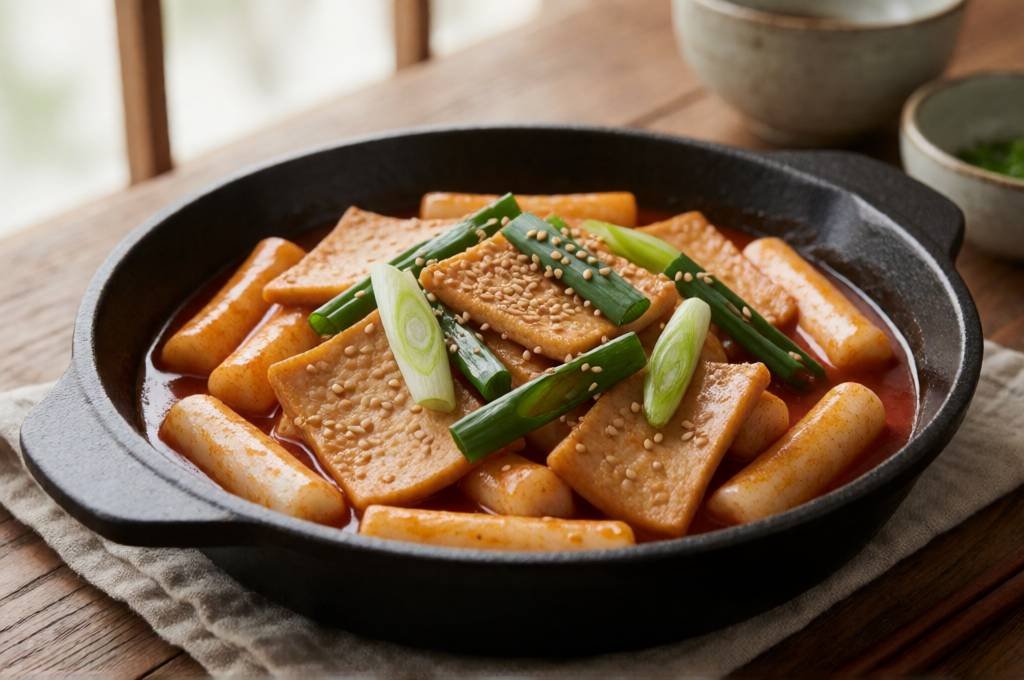
The base liquid matters more than most recipes admit. A quick stock of kelp and dried anchovies gives the sauce a savoury floor that plain water cannot, and it takes only 10 minutes. For a vegetarian version, mushroom and kelp stock works beautifully, especially with a spoonful of miso stirred in.
Eat it straight from the pan with the sauce still bubbling, topped with spring onion and sesame seeds. A boiled egg or two simmered in the sauce alongside is standard, and a scatter of grated cheese over the top is a popular modern addition that melts into the glaze.
Ingredients
- 500 g Korean rice cakes (tteok), cylinders or ovals
- 600 ml water
- 10 g dried kelp (dasima), plus 6 dried anchovies for the stock (or 4 dried shiitake for a vegetarian stock)
- 3 tbsp gochujang (Korean red chilli paste)
- 1 tbsp gochugaru (Korean chilli flakes)
- 1 tbsp soy sauce
- 1 tbsp sugar or honey
- 2 garlic cloves, grated
- 1 tsp sesame oil
- 120 g Korean fish cake (eomuk), sliced into triangles (optional)
- 3 spring onions, cut into 5 cm lengths
- 2 hard-boiled eggs, peeled (optional)
- 1 tsp toasted sesame seeds
- Optional: 60 g grated mozzarella for melting over the top
Instructions
- Make the stock: bring the water to a gentle simmer with the kelp, anchovies (or shiitake) and simmer for 10 minutes. Remove the solids and discard.
- If your rice cakes are hard and refrigerated, soak them in warm water for 10 minutes, then drain. Fresh or vacuum-packed rice cakes can go straight in.
- Whisk the gochujang, gochugaru, soy sauce, sugar and garlic together in a small bowl to make a smooth paste.
- Bring the strained stock back to a simmer in a wide pan and stir in the sauce paste. Simmer for 2 minutes until it turns a deep, glossy red.
- Add the rice cakes and the fish cake pieces. Simmer over medium heat for 8-10 minutes, stirring often with a wooden spoon so nothing sticks to the base.
- The sauce is ready when it has reduced enough to coat the rice cakes thickly and a spoon dragged across the pan leaves a brief trail. Add the boiled eggs, if using, in the last 3 minutes to warm through.
- Take the pan off the heat and stir in the sesame oil. Scatter over the spring onions and sesame seeds. If you want the cheese version, scatter mozzarella over the top and cover the pan for 1 minute until it melts.
- Serve immediately, straight from the pan, while the sauce is still bubbling and the rice cakes are at their chewiest.
Cook’s tips
- Stir constantly in the last few minutes - the sauce thickens fast and the sugars in gochujang will catch and burn on the base of the pan.
- Rice cakes harden when cold. If you are using refrigerated ones, the warm-water soak makes a real difference to the final texture.
- Control the heat with the gochugaru rather than more gochujang - adding gochujang mainly adds sweetness and salt, not fire.
- Tteokbokki thickens as it stands. If you are serving it a little later, keep it looser than you think it should be and reheat with a splash of water.
Substitutions
- For a vegetarian version, use shiitake and kelp stock and leave out the fish cake, adding a handful of sliced mushrooms and a spoon of miso instead.
- Fish cake is optional. Firm tofu cubes or extra mushrooms are good stand-ins.
- Honey or rice syrup can replace the sugar; rice syrup gives the traditional shine.
- Grated mozzarella or mild cheddar melted over the top is a popular modern variation.
Storage & reheating
Best eaten straight away, when the sauce is at its glossiest. Leftovers keep for 2 days in the fridge; reheat in a pan with 2-3 tbsp water over low heat until the sauce loosens and coats again. The cooked dish does not freeze well, as the rice cakes turn grainy, but unused rice cakes freeze for up to 3 months.
FAQ
What are tteokbokki rice cakes made of?
They are made from short-grain rice flour, steamed and shaped into chewy cylinders or discs. Check the packet if you need them to be gluten-free, as some brands blend in wheat flour.
How spicy is tteokbokki?
It ranges from mildly warm to seriously hot depending on the gochugaru. This recipe is medium-hot; halve the gochugaru for a gentler version or double it if you like proper heat.
What is eomuk?
Eomuk is Korean fish cake, sold frozen or chilled in Asian grocers. It is simmered in the sauce and soaks it up. It can simply be left out.
Can I make tteokbokki without anchovies?
Yes. Simmer dried shiitake and kelp for 10 minutes for a vegetarian stock, and add a spoonful of miso or extra soy sauce for savoury depth.