Pad Thai with Tofu
A sweet-sour stir-fry of rice noodles, golden tofu, crunchy peanuts and a bright squeeze of lime — a vegetarian take on Thailand's most famous street food.
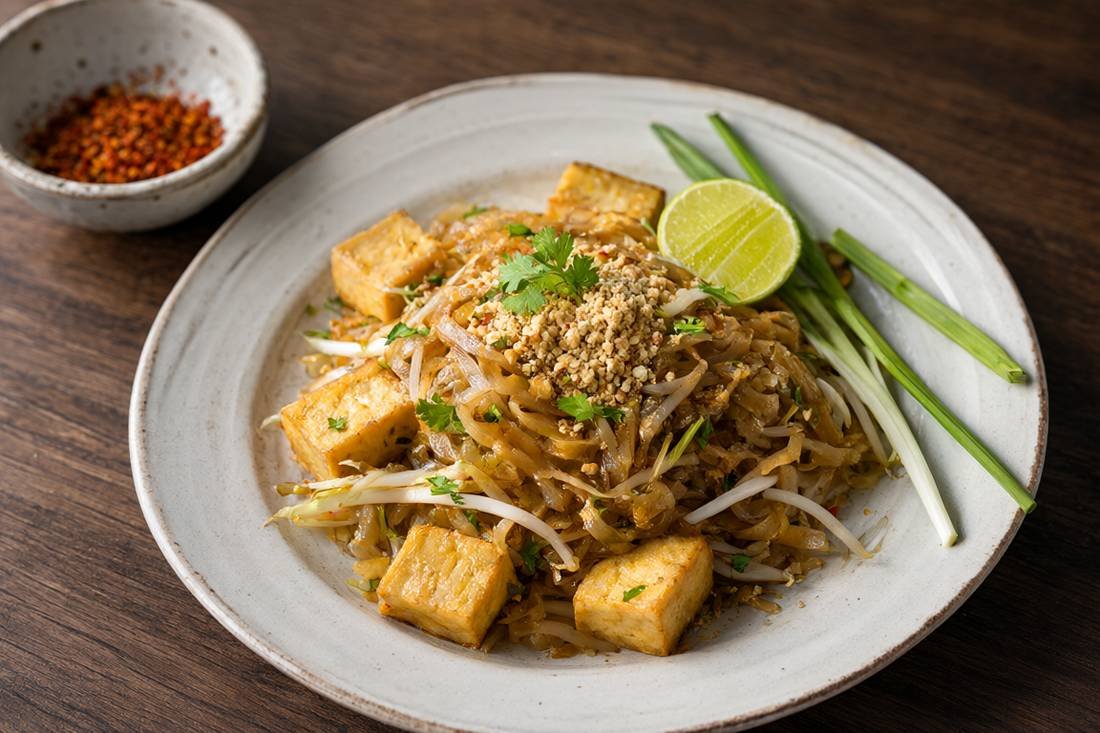
We use dried flat rice noodles rather than fresh ones because they soak up the sauce beautifully without turning mushy. The tofu gets a quick shallow fry until golden and crisp at the edges, which gives the noodles some welcome texture. Egg is optional but traditional — leave it out for a vegan version and add a little extra tofu.
The trick is to work fast over high heat and have everything chopped and within arm's reach before you start. Pad Thai waits for no one. Serve it straight from the wok with extra peanuts and lime wedges on the side, and let everyone squeeze their own.
Ingredients
- 200g dried flat rice noodles (3–5mm wide)
- 300g firm tofu, pressed and cut into 2cm cubes
- 3 tablespoons neutral oil, divided
- 2 garlic cloves, finely chopped
- 2 shallots, thinly sliced
- 3 spring onions, white parts sliced, green parts cut into 3cm lengths
- 2 eggs, lightly beaten (optional; see subs)
- 150g beansprouts
- 3 tablespoons tamarind paste
- 2 tablespoons palm sugar (or light brown sugar)
- 2 tablespoons soy sauce
- 1 tablespoon lime juice, plus extra wedges to serve
- 1 teaspoon chili flakes, plus extra to serve
- 60g roasted peanuts, roughly crushed
- Handful of fresh coriander, roughly chopped
- Lime wedges, to serve
Instructions
- Soak the rice noodles in a large bowl of warm (not boiling) water for 15–20 minutes, until pliable but still slightly firm in the centre. Drain well and set aside.
- Meanwhile, whisk the tamarind paste, palm sugar, soy sauce, lime juice and chili flakes in a small bowl until the sugar dissolves. Taste and adjust — it should be sour first, then sweet, then salty.
- Pat the tofu cubes dry with kitchen paper. Heat 2 tablespoons of the oil in a large wok or wide frying pan over medium-high heat. Fry the tofu for 6–8 minutes, turning occasionally, until golden and crisp on most sides. Transfer to a plate.
- Add the remaining 1 tablespoon oil to the wok. Stir-fry the garlic, shallots and spring onion whites for 30 seconds, until fragrant but not coloured.
- Push the aromatics to one side, pour the beaten eggs into the empty space and scramble for 30–45 seconds until just set. Break up roughly with your spatula.
- Add the drained noodles and the sauce. Toss constantly for 2–3 minutes, lifting and turning the noodles so every strand gets coated. If the noodles seem stiff, add a splash of water — no more than a tablespoon at a time.
- Return the tofu to the wok with the beansprouts and spring onion greens. Toss for 1 minute more, just until the sprouts are barely wilted and everything is hot.
- Divide between four plates. Scatter over the crushed peanuts and coriander, and serve with lime wedges and extra chili flakes.
Cook’s tips
- Press the tofu for at least 15 minutes under a weighted plate to remove excess water — dry tofu fries crisp rather than steams.
- Soak noodles in warm water, never boiling, or they will turn gluey before they hit the wok.
- Cook in batches if your wok is small; overcrowding steams the noodles instead of stir-frying them.
- Mix the sauce just before cooking — palm sugar sets hard once it cools.
Substitutions
- For a vegan version, omit the eggs and add an extra 100g of tofu, or use a firm silken tofu scrambled in the same way.
- Palm sugar can be replaced with light brown sugar or coconut sugar.
- No tamarind paste? Use 2 tablespoons lime juice plus 1 tablespoon rice vinegar, though the flavour will be sharper.
- Swap beansprouts for shredded carrot or thinly sliced cabbage for extra crunch.
Storage & reheating
Store leftovers in an airtight container in the fridge for up to 2 days; reheat in a hot wok with a splash of water, as the noodles firm up when cold.
Frequently asked questions
Can I make pad thai with tofu ahead of time?
The sauce and fried tofu can be prepared up to a day ahead and kept covered in the fridge. Cook the noodles to order though, as they dry out and clump once refrigerated.
What is the best substitute for tamarind paste?
Tamarind is what gives pad thai its distinctive sour depth. If you can't find it, mix equal parts lime juice and rice vinegar, but add it gradually — it's sharper than tamarind.
How do I stop the noodles sticking together?
Drain them thoroughly after soaking and toss with a teaspoon of oil if you're not cooking them straight away. Once in the wok, keep them moving over high heat and add a splash of water if they start to clump.
Can I use a different type of noodle?
Flat rice noodles are traditional, but you can use wider ones or even thin rice vermicelli. Avoid wheat noodles, which have a very different texture and won't absorb the sauce in the same way.


