Salmon Onigiri Lunch Box
Fluffy rice triangles filled with flaked salmon and toasted sesame, packed with crunchy pickles for a satisfying Japanese-style lunch box.
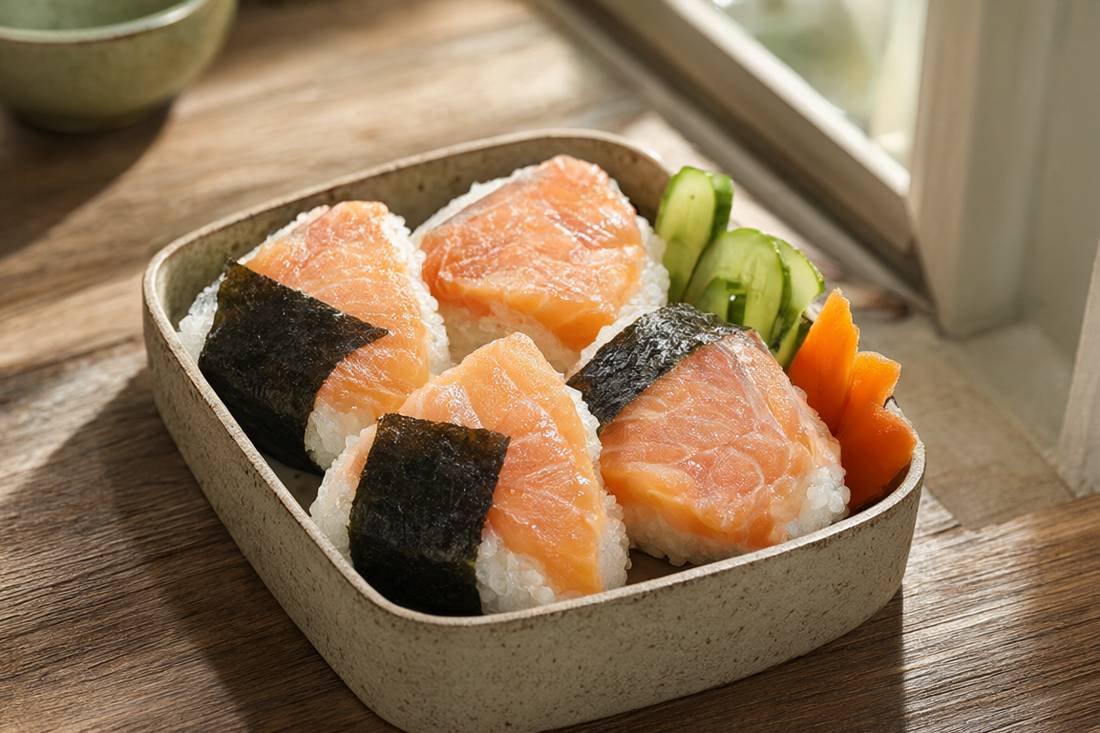
Packing them with quick-pickled cucumbers and carrots turns a simple rice ball into a complete meal. The pickles add crunch and a bright, tangy contrast to the rich salmon filling. I like to wrap each onigiri in a strip of nori for easy handling, but you can also leave them bare and tuck a few extra sheets alongside.
This recipe makes enough for four onigiri, perfect for two generous lunch boxes or four lighter ones. They hold up well in the fridge for a day, making them a great make-ahead option for busy mornings.
Ingredients
- 1 cup Japanese short-grain rice (such as sushi rice)
- 1 1/4 cups water
- 1 tablespoon rice vinegar
- 1 teaspoon sugar
- 1/2 teaspoon salt, plus extra for shaping
- 120 g cooked salmon fillet, skin and bones removed, flaked
- 1 tablespoon toasted sesame seeds
- 1 teaspoon soy sauce
- 1/2 sheet nori, cut into 4 strips (about 2 cm wide)
- For the quick pickles:
- 1/2 cucumber, thinly sliced
- 1 small carrot, julienned
- 2 tablespoons rice vinegar
- 1/4 teaspoon salt
Instructions
- Rinse the rice under cold water until the water runs clear. Drain well.
- Combine the rice and water in a medium saucepan. Bring to a boil over medium-high heat, then cover, reduce the heat to low, and simmer for 12–15 minutes, or until the water is absorbed. Remove from the heat and let stand, covered, for 10 minutes.
- While the rice cooks, make the quick pickles: in a small bowl, combine the cucumber, carrot, rice vinegar, sugar, and salt. Toss well and set aside, stirring occasionally.
- In another bowl, mix the flaked salmon, sesame seeds, and soy sauce. Taste and adjust seasoning if needed.
- Transfer the cooked rice to a large bowl. Sprinkle with the rice vinegar, sugar, and salt. Use a spatula to gently fold the rice to season it evenly. Let cool until comfortable to handle.
- Set up a small bowl of water and a small bowl of salt. Dip your hands in water, then lightly coat your palms with salt.
- Take about 1/4 of the rice (roughly 100 g) and flatten it in your palm. Place a quarter of the salmon mixture in the center. Top with another 1/4 of the rice, then shape into a triangle or oval, pressing gently but firmly. Repeat with the remaining rice and filling to make 4 onigiri.
- Wrap each onigiri with a strip of nori, if using. Serve with the quick pickles on the side.
- To pack for lunch, place the onigiri in a lunch box and add the pickles in a separate small container or compartment to keep them from making the rice soggy.
Cook’s tips
- Use short-grain Japanese rice for the best sticky texture; long-grain rice won't hold together as well.
- Keep your hands wet and lightly salted when shaping to prevent sticking and add a subtle seasoning.
- If your cooked salmon is already seasoned, reduce or omit the soy sauce.
- Onigiri can be shaped into triangles, ovals, or cylinders—whatever you find easiest.
Substitutions
- Swap the salmon for canned tuna (drained) or flaked smoked trout.
- Use white or black sesame seeds, or a mix.
- For a vegan version, replace the salmon with mashed avocado and a pinch of salt, or with umeboshi plum.
- Try other quick-pickled vegetables like daikon radish or red onion.
Storage & reheating
Store onigiri wrapped tightly in plastic wrap in the refrigerator for up to 1 day. Let come to room temperature before eating for the best texture. Keep the pickles in a separate container for up to 3 days.
Frequently asked questions
Can I make salmon onigiri ahead of time?
Yes, you can shape the onigiri up to a day in advance. Wrap each one individually in plastic wrap and refrigerate. For the best flavor and texture, let them sit at room temperature for 15–20 minutes before eating.
What type of rice is best for onigiri?
Short-grain Japanese rice, often labeled as sushi rice, is ideal because it's sticky enough to hold its shape. Avoid long-grain rice like basmati or jasmine, which won't cling together as well.
How do I keep the nori crisp in a lunch box?
Wrap the nori around the onigiri just before eating, or pack it separately in a small airtight bag and add it at lunchtime. Alternatively, wrap the onigiri in plastic and then add nori, which helps prevent moisture from reaching the nori.
Is this lunch box gluten-free?
The recipe can be gluten-free if you use gluten-free soy sauce (tamari) and ensure the nori and other ingredients are gluten-free. Always check labels if you have a severe allergy.


