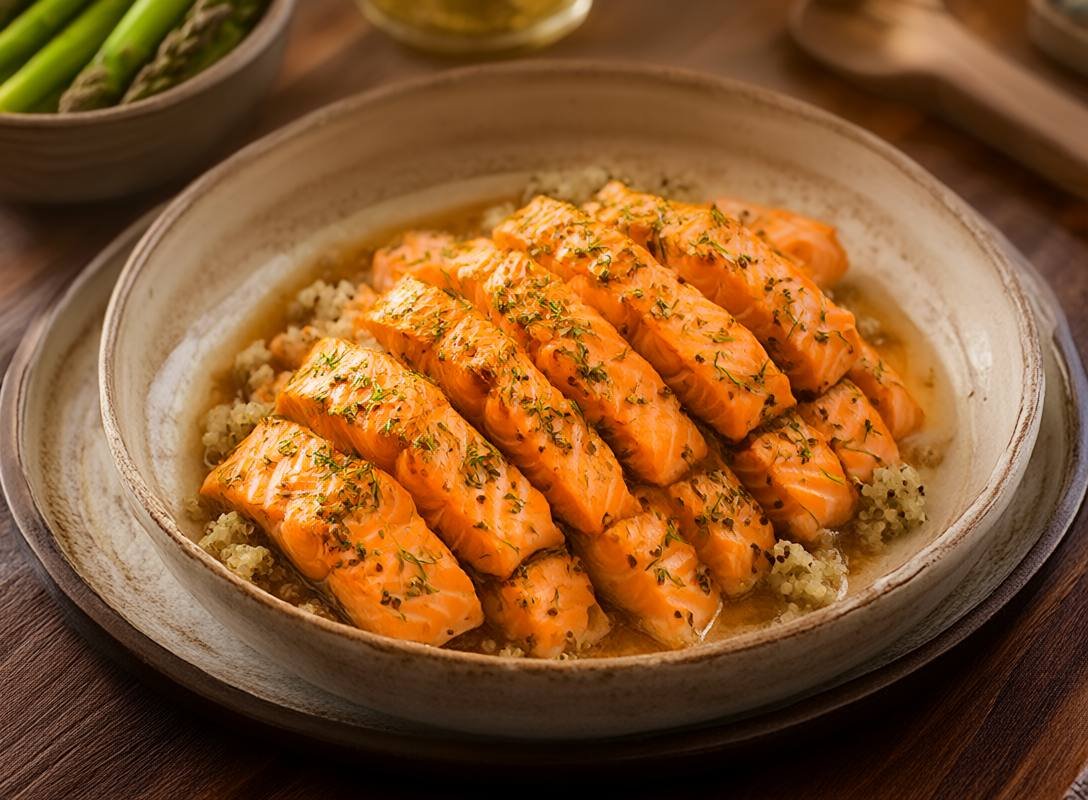
Zesty Citrus Herb Salmon with Quinoa and Asparagus
If you're looking for a bright and flavorful dish that’s both healthy and satisfying, this Zesty Citrus Herb Salmon is your answer. Paired with fluffy quinoa and tender asparagus, it's a meal that’s as pleasing to the eyes as it is to the palate. The vibrant citrus and herb marinade transforms simple salmon into a restaurant-worthy dinner, all in under an hour.
Ingredients
- 4 salmon fillets
- 2 tablespoons olive oil
- Juice and zest of 1 lemon
- Juice and zest of 1 orange
- 2 tablespoons fresh parsley, chopped
- 1 tablespoon fresh dill, chopped
- 2 cloves garlic, minced
- Salt and pepper to taste
- 1 cup quinoa, rinsed
- 2 cups vegetable or chicken broth
- 1 pound asparagus, trimmed
- 1 tablespoon balsamic vinegar
Instructions
- Marinate the Salmon: In a bowl, mix olive oil, lemon juice, orange juice, lemon zest, orange zest, parsley, dill, garlic, salt, and pepper. Add salmon fillets and marinate for at least 15 minutes.
- Cook Quinoa: In a pot, bring vegetable or chicken broth to a boil. Add rinsed quinoa, cover, and reduce heat to low. Simmer for about 15 minutes until liquid is absorbed. Fluff with a fork.
- Roast Asparagus: Preheat the oven to 400°F (200°C). Arrange asparagus on a baking sheet, drizzle with olive oil, and season with salt and pepper. Roast for 10-15 minutes until tender.
- Cook Salmon: Heat a skillet over medium heat. Remove salmon from marinade and place in the skillet. Cook for 4-5 minutes on each side or until the salmon is cooked through.
- Serve: On a plate, place a scoop of quinoa, top with roasted asparagus, and add the salmon fillet. Drizzle with balsamic vinegar for a nice finish.
Cook’s tips
- For the best flavor, marinate the salmon for at least 15 minutes, but no longer than 30 minutes to avoid the citrus altering the fish's texture.
- Rinse quinoa thoroughly before cooking to remove its natural bitter coating (saponin).
- To prevent the asparagus from becoming soggy, spread them in a single layer on the baking sheet and don't overcrowd.
- Salmon is done when it flakes easily with a fork and reaches an internal temperature of 145°F (63°C).
- Let the salmon rest for a couple of minutes after cooking to retain its juices.
Substitutions
- Use brown rice or couscous instead of quinoa for a different grain base.
- Swap fresh parsley and dill with dried herbs (use 1 teaspoon each) if fresh is unavailable.
- Substitute balsamic vinegar with a squeeze of fresh lemon juice or a drizzle of honey for a different finishing touch.
- If you don't have orange, use an extra lemon or a splash of orange juice from a carton.
- Try green beans or broccolini in place of asparagus.
Storage & reheating
Store leftovers in an airtight container in the refrigerator for up to 3 days. Reheat gently in a skillet over low heat or in the microwave, adding a splash of water to keep the salmon moist.
FAQ
Can I use frozen salmon fillets?
Yes, thaw the salmon completely in the refrigerator overnight and pat dry before marinating. The cooking time may be slightly longer.
What can I serve with this dish besides quinoa?
This salmon pairs well with any grain like rice, farro, or even a simple green salad. You can also serve it with roasted potatoes or crusty bread.
How do I know when the salmon is fully cooked?
The salmon is done when it turns opaque and flakes easily with a fork. The internal temperature should reach 145°F (63°C).
Can I make this recipe ahead of time?
You can prepare the quinoa and asparagus ahead, but the salmon is best cooked fresh. Marinate the salmon up to 2 hours in advance for deeper flavor.