Miso Ramen with Mushrooms
A rich, savory miso broth with mixed mushrooms, sweetcorn, and spring onion, served over springy ramen noodles. Ready in about 30 minutes.
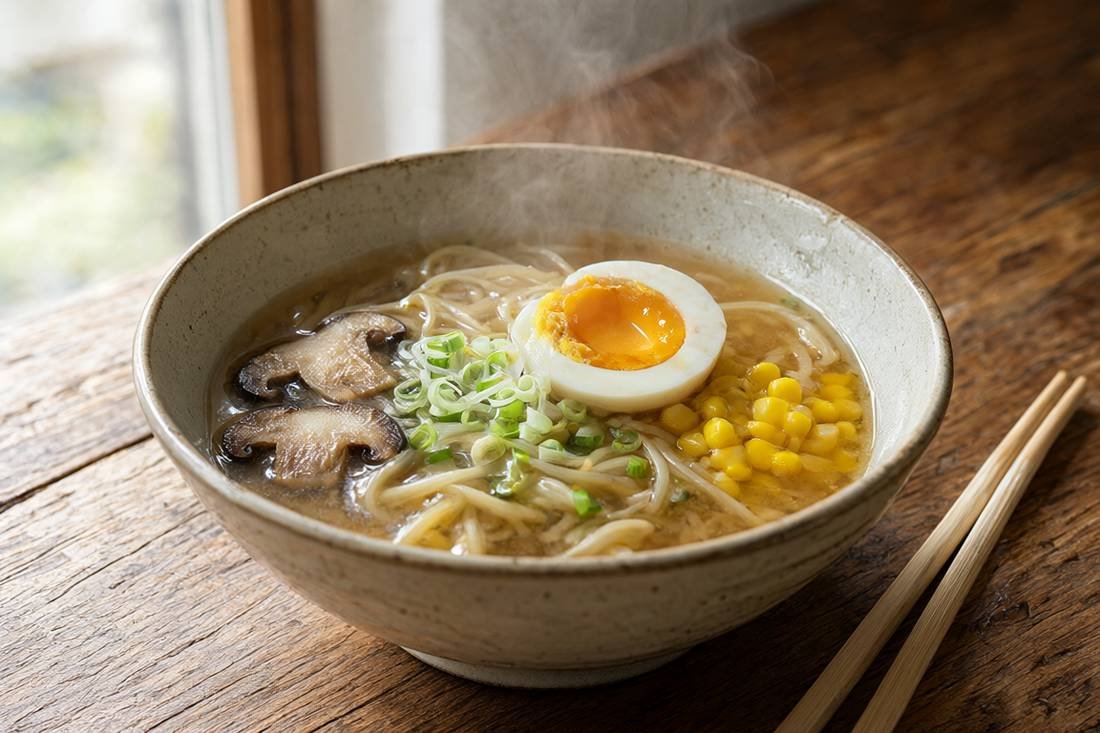
We're using a mix of fresh mushrooms—cremini for substance, shiitake for umami, and a handful of enoki or oyster mushrooms for texture. Sweetcorn adds little pops of sweetness that balance the salty miso, while spring onions bring freshness. A soft-boiled egg on top is optional but lovely if you eat eggs.
This recipe is flexible: use whatever mushrooms you have on hand, and feel free to add a sheet of nori or a pinch of chili flakes. The key is to not boil the miso—whisk it in at the end to preserve its flavor and beneficial cultures.
Ingredients
- 4 portions ramen noodles (about 300g fresh or 200g dried)
- 2 tablespoons toasted sesame oil
- 1 onion, finely chopped
- 4 garlic cloves, minced
- 1 tablespoon fresh ginger, grated
- 300g mixed fresh mushrooms (cremini, shiitake, oyster), sliced
- 1.2 litres vegetable stock
- 4 dried shiitake mushrooms
- 3 tablespoons white miso paste
- 1 tablespoon soy sauce
- 1 teaspoon sugar
- 200g sweetcorn kernels (canned or frozen)
- 4 spring onions, thinly sliced
- Optional: 4 soft-boiled eggs, halved
- Optional: toasted sesame seeds, for garnish
Instructions
- In a small saucepan, bring 200ml of the vegetable stock to a simmer. Remove from heat, add the dried shiitake mushrooms, and let soak for 10 minutes. Remove the mushrooms, discard the stems, and slice the caps. Reserve the soaking liquid.
- Meanwhile, cook the ramen noodles according to package instructions. Drain, rinse briefly under cold water to stop cooking, and set aside.
- In a large pot, heat the sesame oil over medium heat. Add the onion and cook for 5 minutes until softened. Add the garlic and ginger and cook for 1 minute until fragrant.
- Add the fresh mushrooms and cook for 5–7 minutes until they release their moisture and start to brown.
- Pour in the remaining vegetable stock and the reserved shiitake soaking liquid. Bring to a simmer and cook for 5 minutes.
- Reduce the heat to low. In a small bowl, whisk the miso paste with a ladleful of hot broth until smooth. Stir the mixture back into the pot. Add the soy sauce and sugar. Taste and adjust seasoning. Do not boil after adding miso.
- Add the sweetcorn and sliced rehydrated shiitake mushrooms. Simmer for 2 minutes to heat through.
- Divide the cooked noodles among four deep bowls. Ladle the hot broth and mushrooms over the noodles. Top with spring onions, and if using, add a soft-boiled egg half and a sprinkle of sesame seeds.
Cook’s tips
- Use a mix of mushrooms for the best texture and flavor.
- Don't boil the broth after adding miso—it can become grainy.
- For a spicier kick, add a teaspoon of chili paste or a pinch of cayenne.
Substitutions
- White miso can be substituted with yellow or red miso, but adjust quantity to taste as they are stronger.
- Fresh ramen noodles can be replaced with dried ramen or even soba noodles.
- Vegetable stock can be replaced with water plus an extra tablespoon of soy sauce.
Storage & reheating
Store leftover broth and noodles separately in the refrigerator for up to 3 days. Reheat the broth gently and add freshly cooked noodles to avoid sogginess.
Frequently asked questions
Can I make this miso ramen vegan?
Yes, the recipe is already vegan if you omit the optional soft-boiled egg. Ensure your noodles and miso paste are vegan-friendly.
What type of miso is best for ramen?
White (shiro) miso is mild and sweet, making it ideal for a balanced broth. Yellow or red miso can be used for a deeper, saltier flavor.
Can I add other vegetables?
Absolutely. Baby spinach, bok choy, or sliced carrots are great additions. Add quick-cooking greens in the last minute of simmering.
How do I prevent the noodles from getting soggy?
Cook the noodles separately and add them to the bowls just before serving. If storing, keep noodles and broth separate.


