Adjaruli Khachapuri - Georgian Cheese Bread Boat
A boat-shaped Georgian bread filled with molten cheese and finished with a runny egg yolk and butter, made to be torn apart and stirred together at the table.
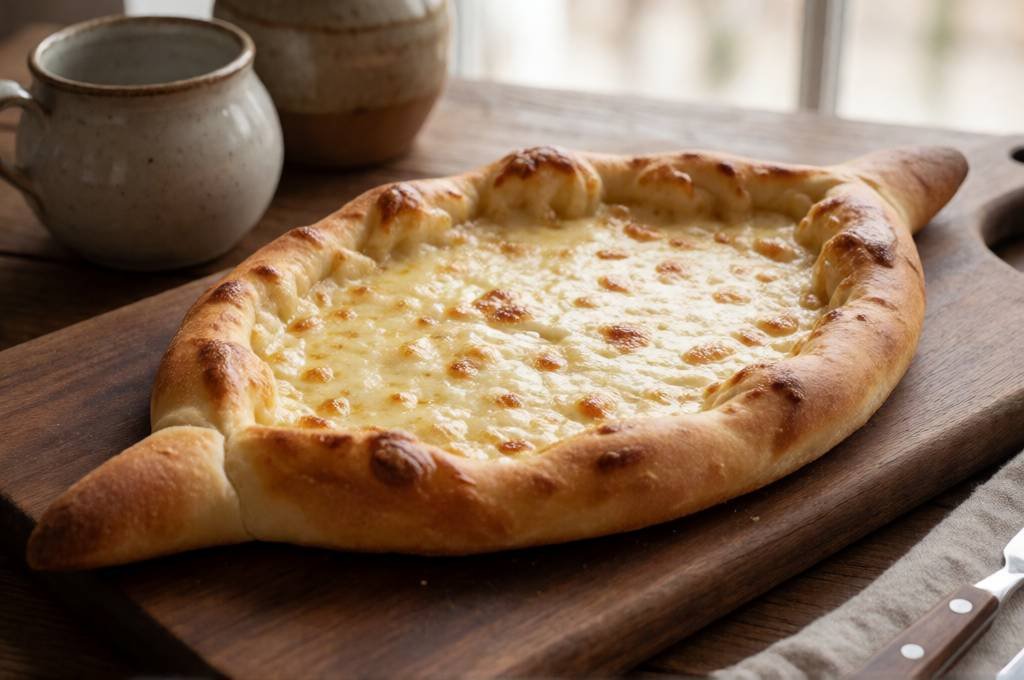
Out of the oven, the hot cheese is crowned with a raw egg yolk and a knob of butter. The yolk sets just slightly from the heat of the bread, and then you stir it through the cheese with a fork at the table until the filling turns glossy and pale gold. The crust of the boat is torn off and used as a spoon.
The cheese matters. Georgian kitchens use sulguni and imeruli, which are salty, springy and stretchy. A blend of low-moisture mozzarella for the pull and feta for the salt gets you very close with supermarket ingredients.
Ingredients
- 350 g strong white bread flour, plus extra for dusting
- 1 tsp instant yeast
- 1 tsp caster sugar
- 1 tsp fine salt
- 220 ml warm milk (about 40C)
- 1 tbsp olive oil, plus extra for greasing
- 250 g low-moisture mozzarella, coarsely grated
- 150 g feta, crumbled
- 100 g ricotta or curd cheese
- 4 egg yolks (one per bread) - or 2 yolks if making two larger breads
- 40 g cold butter, cut into 4 thin slices
- Freshly ground black pepper, to finish
Instructions
- Whisk the flour, yeast, sugar and salt in a large bowl. Pour in the warm milk and olive oil and mix to a shaggy dough.
- Knead on a lightly floured surface for 8-10 minutes, or 6 minutes in a stand mixer with a dough hook, until smooth and elastic. The dough should spring back when pressed.
- Lightly oil the bowl, cover and leave in a warm place for 1 to 1 1/2 hours, until roughly doubled. Meanwhile, mix the mozzarella, feta and ricotta in a bowl and chill.
- Heat the oven to 240C (220C fan) and put a baking stone or an upturned heavy tray in to heat for at least 20 minutes.
- Divide the dough into 4 pieces. Roll each into an oval about 25 cm long and 15 cm wide, then roll the two long edges inward and pinch the ends into points, forming a boat with a hollow centre.
- Spoon a quarter of the cheese mix into each boat, spreading it to the edges but leaving the crust clear. Do not overfill or the cheese will spill.
- Bake for 12-15 minutes, until the crust is deep golden and the cheese is fully melted and bubbling at the edges.
- Working quickly, slide each hot bread onto a plate, make a small well in the centre of the cheese and drop in a yolk, then top with a slice of butter and a twist of black pepper. Serve immediately, with a fork for stirring the yolk through the cheese at the table.
Cook’s tips
- Grate the mozzarella coarsely rather than finely - bigger strands give a better, stringier pull.
- A screaming-hot oven and a preheated stone are what create the blistered, crisp base. A lukewarm oven gives a pale, floppy boat.
- Do not add the yolk before baking. It is added to the hot bread so it stays runny and gets stirred through at the table.
- If your cheese mix seems wet, add a spoonful of grated mozzarella and a little flour to bind it - watery filling will leak through the dough.
Substitutions
- Sulguni or imeruli cheese is the traditional choice if you can find a Georgian or Eastern European shop; substitute equal weights for the mozzarella and feta.
- Not keen on raw yolk? Bake the bread, then crack a whole egg into the well and return it to the oven for 3-4 minutes until just set.
- A ghee or olive-oil finish can replace the butter slice, though butter is traditional.
- A little finely chopped parsley or dill scattered over the top is a common finishing touch.
Storage & reheating
Khachapuri is at its best within 10 minutes of coming out of the oven, while the cheese is molten. Leftovers keep for 2 days in the fridge; reheat in a 200C oven for 6-8 minutes, as the microwave makes the crust rubbery. The unbaked dough can be made ahead and refrigerated for 24 hours after the first rise, then shaped and baked from cold with 3-4 extra minutes in the oven.
FAQ
What is the difference between khachapuri and adjaruli khachapuri?
Khachapuri is the general Georgian cheese bread category, and it comes in many styles - round imeruli, filled pastries, or the popular boat-shaped Adjaran version with egg and butter on top.
What cheese can I use if I cannot buy sulguni?
A blend of about 60 percent low-moisture mozzarella, 30 percent feta and 10 percent ricotta gives the right stretch, salt and creaminess all at once.
Can I make the dough the day before?
Yes. Let it rise, then refrigerate in an oiled bowl overnight. Bring it to room temperature for 30 minutes before rolling and baking.
Why did my khachapuri leak cheese?
Usually overfilling or too wet a filling. Keep the cheese mound below the rim of the boat and press the pinched edges firmly so the hull holds the molten centre in.