Pad See Ew with Tofu
Wide rice noodles charred with tofu, gai lan and sweet soy for a smoky, satisfying Thai-style vegetarian pad see ew.
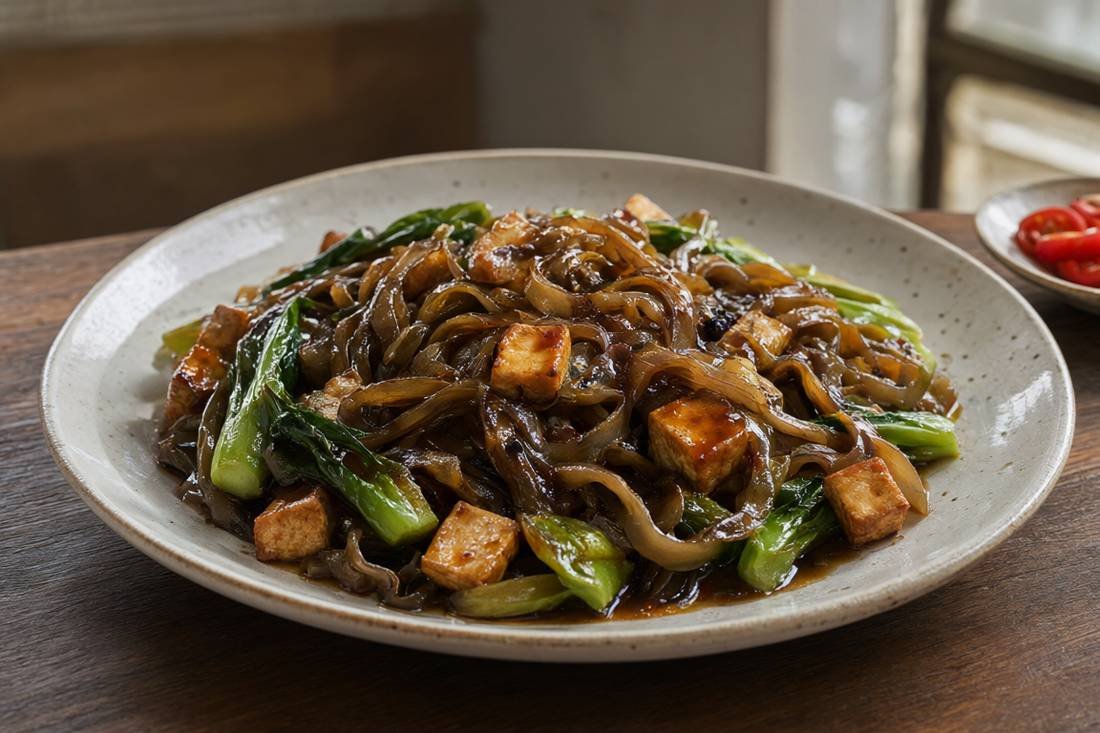
A good pad see ew is cooked fast. The noodles need to sit still just long enough to blister, then get tossed with egg, crisp gai lan and a sauce that clings rather than pools. Have everything chopped and within arm's reach before the pan goes on the heat — the whole stir-fry takes under ten minutes.
If you can find fresh wide rice noodles, use them; they separate easily and soak up the sauce beautifully. Dried ones work too with a careful soak. Either way, the result is a glossy, comforting plate of noodles with a proper restaurant-style char.
Ingredients
- 400 g fresh wide rice noodles (or 200 g dried wide rice noodles, soaked)
- 400 g firm tofu, pressed and cut into 2 cm cubes
- 2 tablespoons vegetable oil, plus extra for the pan
- 4 garlic cloves, finely chopped
- 1 large egg, lightly beaten
- 250 g gai lan (Chinese broccoli), stems sliced 1 cm thick, leaves left whole
- 3 tablespoons dark sweet soy sauce (kecap manis)
- 2 tablespoons light soy sauce
- 1 tablespoon vegetarian oyster sauce
- 1 teaspoon dark soy sauce
- 1 teaspoon caster sugar
- 1 teaspoon white vinegar
- 1/4 teaspoon ground white pepper
- Thinly sliced red chilies and extra white pepper, to serve (optional)
Instructions
- If using dried noodles, soak in warm water for 20 minutes until pliable but still firm, then drain well. If using fresh noodles, gently separate them with your hands and set aside.
- Pat the pressed tofu dry, then cut into 2 cm cubes. In a small bowl, whisk together the dark sweet soy, light soy, vegetarian oyster sauce, dark soy, sugar and vinegar until the sugar dissolves.
- Heat 2 tablespoons of oil in a large wok or wide frying pan over medium-high heat. Add the tofu and fry for 4–5 minutes, turning occasionally, until golden and crisp on at least two sides. Transfer to a plate.
- Add a little more oil to the pan if it looks dry, then add the garlic and stir for 15 seconds until fragrant. Push the garlic to one side, pour in the egg and scramble it quickly for about 30 seconds, breaking it into small pieces.
- Add the gai lan stems and stir-fry for 1 minute, then add the leaves and cook for another 30 seconds until just wilted but still bright green.
- Add the noodles and pour the sauce over them. Toss gently but thoroughly with tongs or two spatulas so every strand is coated. Let the noodles sit undisturbed for 30–45 seconds at a time between tosses so they char against the hot pan — repeat this three or four times.
- Return the tofu to the pan, add the white pepper and toss once more. Taste and add a splash more light soy if needed.
- Divide between warm plates and serve immediately, with sliced chilies and extra white pepper on the side if you like.
Cook’s tips
- Press the tofu for at least 15 minutes under a weighted plate so it browns instead of steaming.
- A very hot pan is essential — cook in two batches if your pan is small so the noodles char rather than stew.
- Separate fresh noodles gently; pulling hard tears them and makes the dish gluey.
- Add the sauce only when the noodles are already in the pan so it coats evenly rather than burning on the base.
Substitutions
- Gai lan: use broccolini or Chinese broccoli stems plus a handful of spinach added at the very end.
- Vegetarian oyster sauce: swap in hoisin sauce or extra dark sweet soy.
- Fresh wide rice noodles: dried wide rice noodles work; soak until just pliable, never soft.
- Tofu: tempeh or seitan can stand in, though browning times will vary.
Storage & reheating
Keeps in an airtight container in the fridge for up to 2 days; reheat in a hot pan with a splash of water rather than the microwave to bring back some char.
FAQ
What is the difference between pad see ew and pad thai?
Pad see ew is built on dark sweet soy and wide rice noodles with egg and greens, while pad thai uses tamarind, palm sugar and fish sauce for a tangier, sweeter profile. Pad see ew is also typically less saucy and more charred.
Can I make this pad see ew with tofu vegan?
Yes. Use a vegan oyster sauce or extra dark sweet soy in place of the vegetarian oyster sauce, and replace the egg with an extra 100 g of firm tofu or a handful of sliced mushrooms added with the gai lan stems.
Why did my rice noodles clump together?
Fresh noodles clump if they sit too long before cooking or if the pan is not hot enough. Soak dried noodles only until pliable, drain thoroughly, and cook over high heat with enough oil to keep the strands moving.
Can I add other vegetables?
Yes. Carrot ribbons, sliced red pepper or baby corn work well — add firmer vegetables with the gai lan stems and softer ones with the leaves so everything finishes at the same time.